Building Resilience in an Uncertain World

Keynote speech by John Schindler at Insurance Europe’s 16th International Conference

The views expressed in these remarks are those of the speaker in his role as FSB Secretary General and do not necessarily reflect those of the FSB or its members.

Good morning, everyone.

It is a privilege to join you today at Insurance Europe’s 16th International Conference. I’d like to thank Frédéric de Courtois for his thoughtful opening remarks and Insurance Europe for the opportunity to address such a distinguished audience of global leaders and regulators.

The theme of this year’s conference, “Building Resilience in an Uncertain World,” could not be more timely. We are currently facing profound shifts in our global landscape, including geopolitical, economic, and environmental. These changes bring with them both challenges and opportunities, and they underscore the critical importance of resilience, particularly in the financial and insurance sectors.

Today, I will share my perspective on the current geopolitical and economic outlook, the evolving risks we face, and the pivotal role the insurance sector can play in strengthening global resilience.

The current outlook

Let me begin by addressing the broader context in which we operate.

The ongoing conflict in Iran has introduced a significant degree of uncertainty into the global economic outlook. The disruption to the supply of oil and other commodities has led to higher and more volatile energy prices, raising concerns about a stagflationary shock to the global economy. This, in turn, has fuelled bond market volatility, as inflationary pressures impact investors’ expectations of central bank rate increases. While the current effects are macroeconomic, the ultimate impact on financial stability will hinge on the duration and severity of these disruptions to commodity supplies and global markets. The FSB is closely monitoring these developments for any indications of strain in the resilience of the global financial system.

At the same time, financial markets appear to be overly optimistic given the uncertain economic and geopolitical backdrop. Overvalued and stretched asset prices leave markets vulnerable to sharp downward adjustments, and we’ve already witnessed corrections in certain segments. For instance, bond markets have seen significant movements as concerns about inflation and sovereign debt levels have come to the fore.

Such volatility has the potential to exacerbate existing vulnerabilities in sovereign debt markets, where risks are already elevated. Heightened investor concerns about debt sustainability could further exacerbate refinancing challenges for governments. As we’ve seen in past episodes, stress in sovereign debt markets can spill over into the broader financial sector, amplifying risks to financial stability.

The increasingly interconnected nature of the global financial system means that vulnerabilities in one area can quickly propagate to others and can do so in new ways. This underscores the importance of vigilance, coordination, and proactive risk management to ensure that the financial system remains resilient in the face of evolving challenges. Let me share a few areas that the FSB is watching particularly closely.

Vulnerabilities related to sovereign debt markets

Firstly, sovereign debt markets are increasingly vulnerable due to the growing prevalence of leveraged bond trading strategies. These strategies are employed by some hedge funds looking to profit from arbitrage opportunities in government bond prices and associated derivatives. As highlighted in our recent report on Vulnerabilities in Government Bond-backed Repo Markets, hedge fund cash borrowing in repo markets has increased over the past few years, and now amounts to almost $3 trillion, or 25% of their assets. If the strategies face rising repo rates, higher haircuts or increased margin requirements, they could be unwound quickly, with destabilizing effects on markets during periods of stress. Similar dynamics contributed to significant market dislocations in March 2020.

These developments underscore the importance of maintaining robust risk management practices and ensuring that sovereign debt markets remain resilient in the face of rising challenges.

The insurance sector also has an important role to play in managing these risks. Insurers are significant investors in sovereign debt, and their investment decisions can have a meaningful impact on market dynamics. Insurers, with their long-dated liabilities and structurally large allocations to sovereign debt, are well-positioned to act as patient, stabilising investors in government bond markets, a role of growing importance as other participants pursue shorter-horizon, leverage-driven strategies. Yet the stabilising function performed by long-term investors should not be assumed. For instance, the 2022 gilt market episode, which was driven primarily by pension funds and liability-driven investment strategies, illustrated a broader mechanism that may be relevant to institutional investors with significant fixed income exposures and derivatives overlays: under stress, collateral demands and margin calls can compel asset disposals at precisely the moment markets are most fragile, transforming a structural buyer into a source of amplification. While insurers operate under more stringent liquidity and capital frameworks, ongoing supervisory focus is necessary to ensure that the sector’s stabilising role in sovereign debt markets is durable. This includes areas such as collateral management practices, derivatives exposures, and liquidity preparedness under adverse scenarios, to ensure resilience during periods of market stress.

Vulnerabilities related to private credit

Let me turn to private credit. The FSB defines private credit as nonbank direct lending to medium-sized companies negotiated on a bilateral basis. This financing serves as a vital source of diversification and innovation in financial markets. It bridges critical financing gaps, offering solutions to companies that may be underserved by traditional banks or public markets. Private credit provides faster execution, more tailored structures, longer-term capital commitments, and greater flexibility for borrowers with complex or unconventional needs. It also plays a crucial role in supporting emerging industries, such as artificial intelligence, by providing the debt funding needed to fuel their growth.

The growth of private credit has been remarkable. In the past decade, the sector has expanded significantly, with total assets estimated between $1.5-2.0 trillion at end-2024, across the jurisdictions contributing to our assessment. However, some alternative estimates are much higher. Private credit is expected to continue growing as companies seek alternative sources of financing.

However, alongside these opportunities, private credit introduces a complex array of questions and vulnerabilities that warrant closer examination. Interconnections between private credit funds, banks, insurers, and private equity firms are deepening, raising concerns about potential spillovers in times of stress.

Our recent report on private credit highlights several key vulnerabilities arising from interlinkages with banks, borrower credit quality, and valuations. Importantly, the market remains untested at its current scale; and data gaps mean that authorities do not have full visibility and understanding of potential contagion propagation channels.

Our report also underscores the interconnectedness of private credit with the insurance sector. Insurers and pension funds are key investors in private credit with their activity in this asset class having grown recently. For example, insurers in multiple FSB jurisdictions have seen increasing investments in private assets, and certain large private defined-contribution pension funds and superannuation funds have increased their allocations to illiquid private equity and credit in recent years.

Private equity funds appear to be another key interconnection. Private equity sponsors typically back borrowers in private credit and also appear to be increasingly developing ownership or control relationships with insurers, which are then used to invest in private credit funds.

In addition, private credit issuers rely on private credit ratings that are sometimes provided by smaller and lesser-known agencies. The ratings are important, for example to some investors like insurers, but the use of lesser-known agencies has also raised questions.

A key feature of the above institutional interlinkages relates to cross-border aspects, driven by international capital flows and favoured by diverse market structures, exposing further potential vulnerabilities and channels of propagation of stress.

The concern is not private credit as an asset class, but rather with how private credit might behave under stress and the potential risks associated with that. Indeed, private sector leaders have also raised alarms about these vulnerabilities. Addressing these vulnerabilities will require greater transparency, improved data collection, and enhanced regulatory oversight.

The FSB has outlined follow-up work related to:

  • deepening the analysis of interlinkages and potential vulnerabilities related to liquidity mismatch: This includes examining ties with private equity firms and insurers, and understanding potential issues related to liquidity mismatch in certain private credit funds.
  • improving transparency in order to address data gaps, enhance reporting frameworks, and develop harmonised global definitions to support effective monitoring.
  • sharing supervisory approaches in order to strengthen risk management and governance practices for both banks and nonbanks active in private credit, particularly around valuations and the use of private ratings.

The FSB work on the insurance sector

The insurance sector is not immune to these broader trends. In fact, it is uniquely positioned at the intersection of many of the challenges we face. I’ve mentioned some of these already, like the growing complexity of financial markets, but insurers may also be more directly exposed to challenges from climate change and aging populations than are other parts of the financial system.

One area where the insurance sector plays a particularly critical role is in addressing climate-related risks. The increasing frequency and severity of extreme weather events have highlighted significant protection gaps in many parts of the world. These gaps leave individuals, businesses, and governments vulnerable to the financial impacts of climate events.

Closing these protection gaps will require innovative solutions, including new insurance products, enhanced risk modelling, and greater collaboration between public and private stakeholders. The FSB will continue to support these efforts, including through our work on climate-related financial disclosures and our collaboration with the International Association of Insurance Supervisors (IAIS).

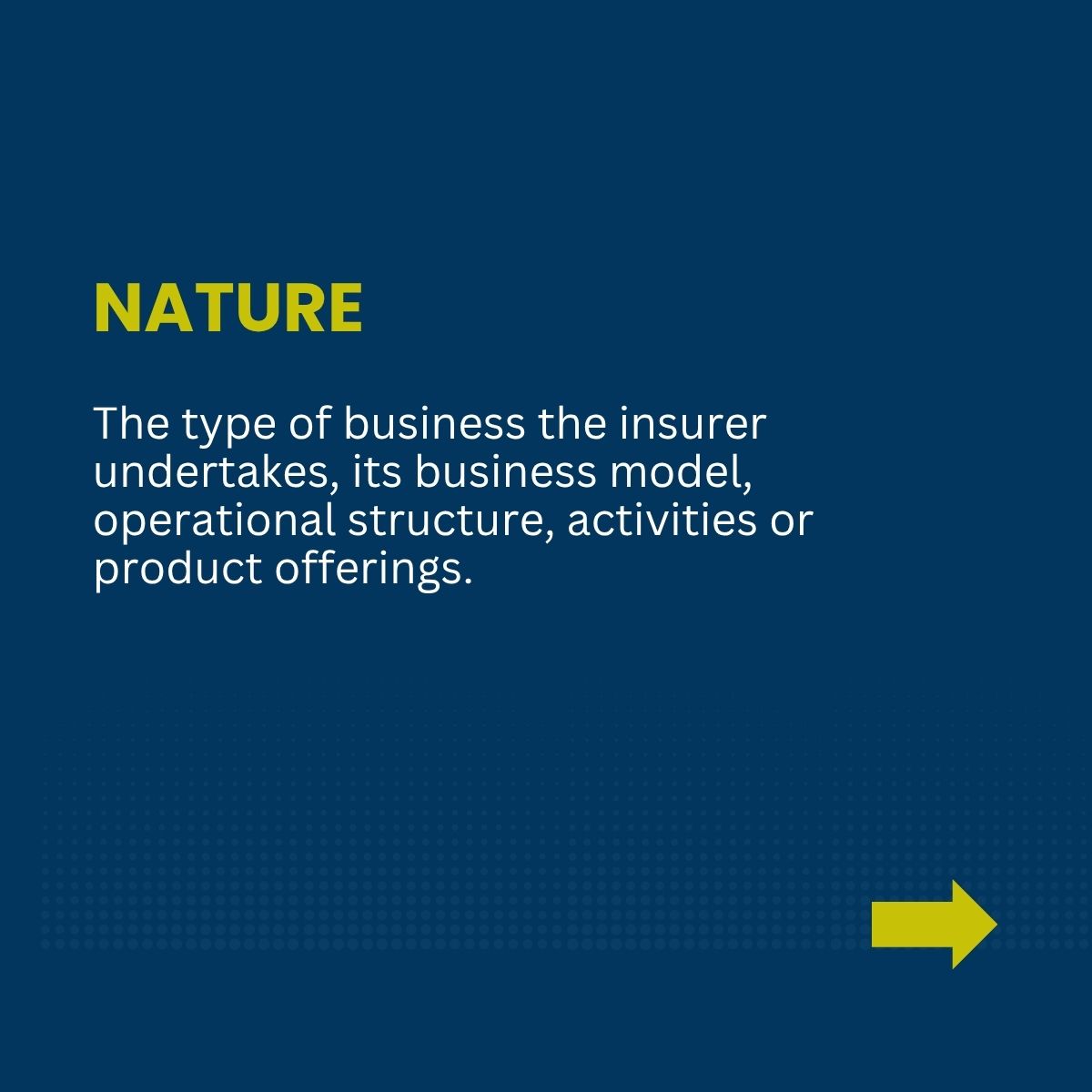
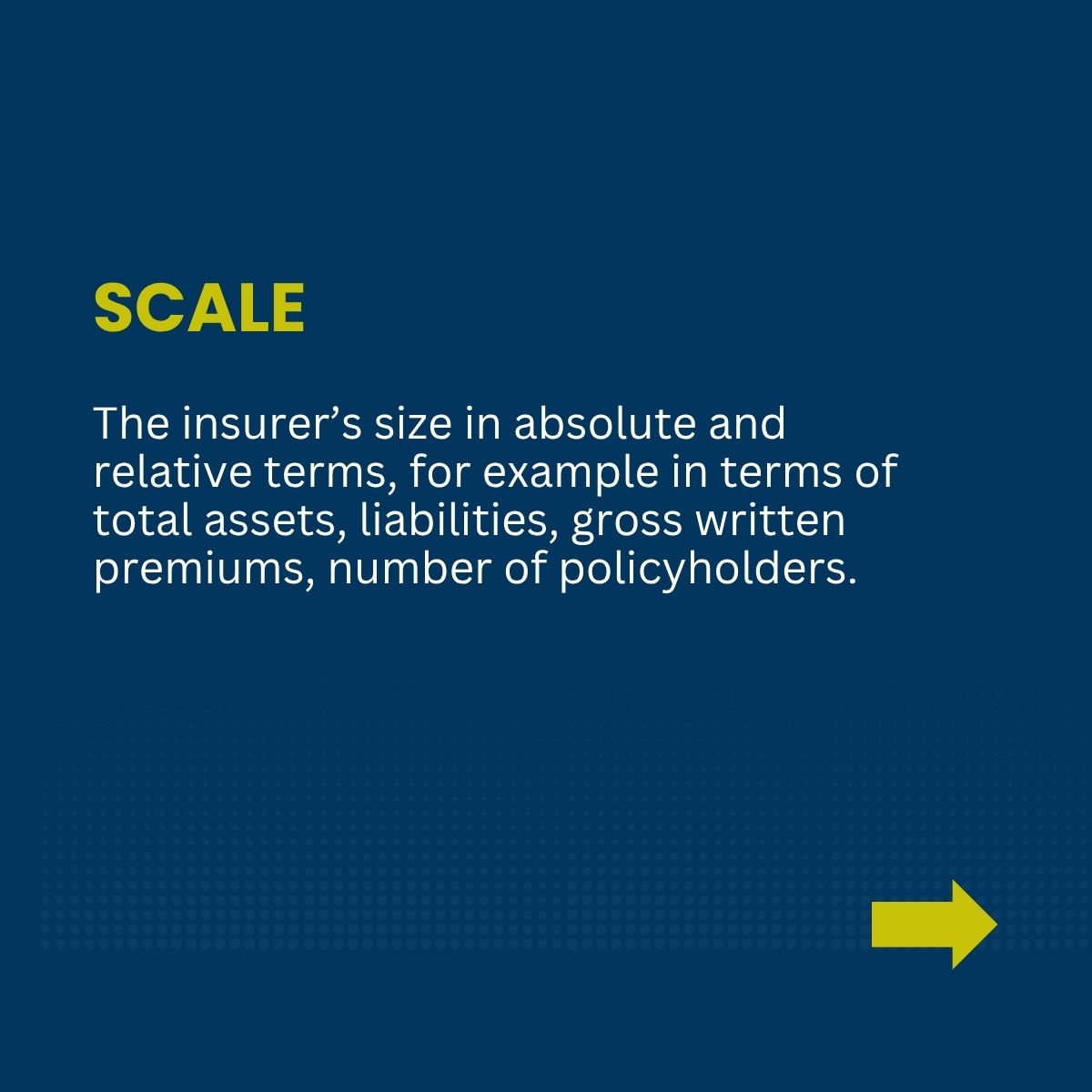
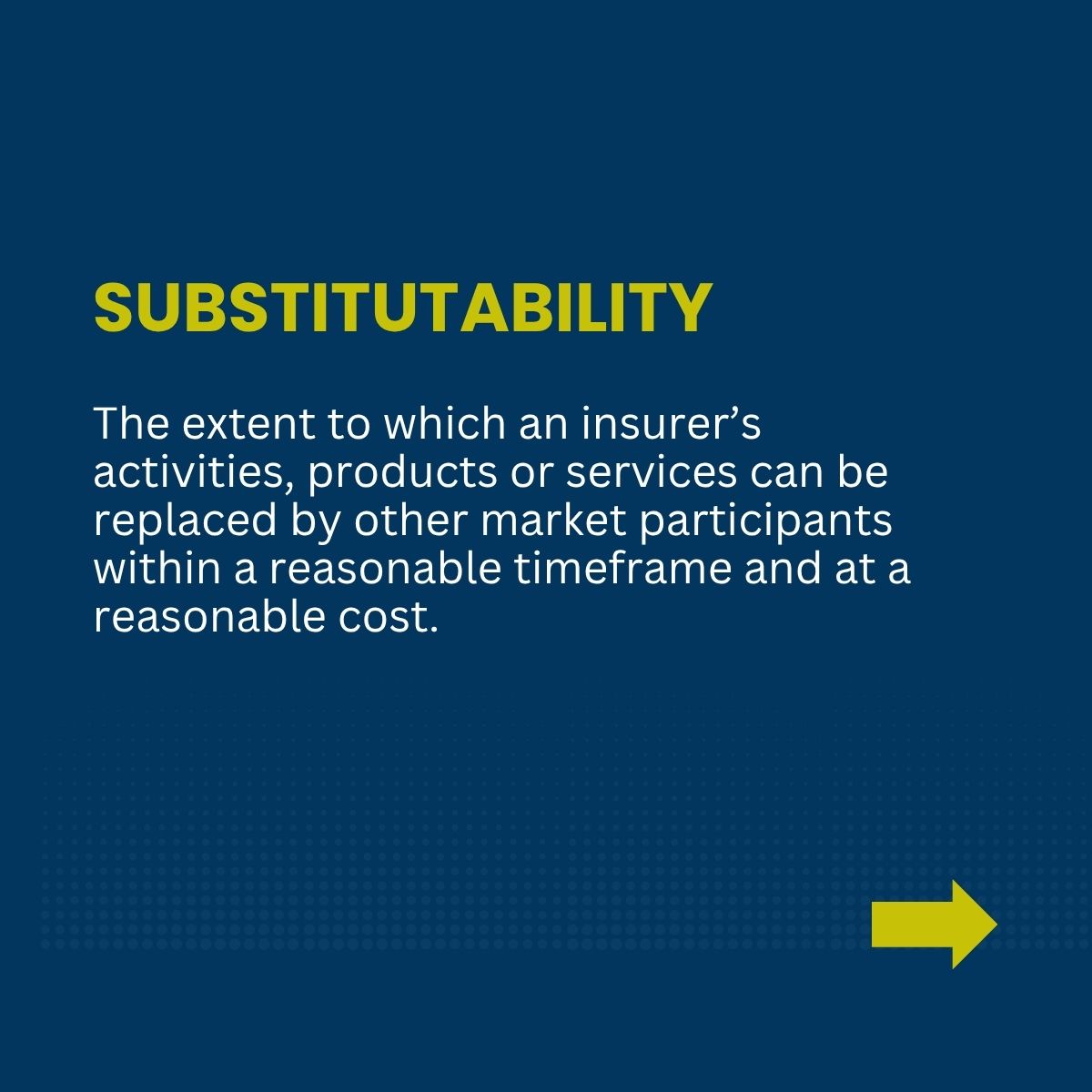
Another area of focus is the resilience of the insurance sector itself. The FSB, in partnership with the IAIS, has made significant progress in developing guidance relating to insurer resolution. In April, the FSB published its final guidance for authorities to assess which insurers should be subject to recovery and resolution planning (RRP) requirements. The guidance outlines six key criteria that authorities should consider: business model, scale, complexity, substitutability, cross-border activities, and interconnectedness. Additionally, it identifies specific circumstances in which recovery and resolution planning requirements should apply, such as when an insurer provides a critical function or when its failure is likely to have a material impact on the financial system and/or the real economy of the jurisdiction. This is intended to align with the requirements in the IAIS’s Insurance Core Principles.

Our decision to move beyond the Global Systemically Important Insurer (G-SII) framework, in favour of the IAIS’s holistic framework for assessing systemic risk in the insurance sector, reflects our recognition of the sector’s unique characteristics and the need for tailored approaches to addressing systemic risks.

Conclusion

In conclusion, while the challenges before us are undoubtedly formidable, they are far from insurmountable. The global financial system has shown remarkable resilience in weathering recent periods of market turmoil and stress, and I am confident that it possesses the strength to navigate the challenges of the present and future.

The insurance sector plays a critical role in fostering systemic resilience. Its ability to adapt to evolving risks and support economic stability is vital to a properly functioning financial system.

The FSB’s aim is to ensure that the sector remains robust and resilient, precisely because of its importance to the global economy. Insurance performs critical economic functions by pooling and transferring risk, mobilising long term savings into investment, and supporting financial stability. This, in turn, underpins confidence and continuity in the real economy, enabling households, businesses and governments to plan, invest and recover from shocks.

The FSB is committed to doing its part. We will continue to monitor developments closely and advance our work in key areas, including private finance and credit markets, foreign exchange derivative markets, and the growing complexity and interconnectedness of the financial system. We will also deepen our collaboration with the IAIS and other international bodies to ensure that the insurance sector remains a pillar of stability and resilience.
While the road ahead may be uncertain, it is also full of opportunity. As we confront today’s uncertainties, the need for resilience has never been greater. It is only through collaboration, vigilance, and innovation that we can address the challenges ahead. The insurance sector, with its unique capacity to manage risks and support economic stability, is an indispensable pillar of the global financial system. By working together across sectors and borders, we can ensure that our financial systems remain robust and adaptable, prepared not only to weather future shocks but to enable sustainable growth and prosperity for all.

Thank you.

FSB Regional Consultative Group for the Americas meets in Grand Cayman

FSB RCG Americas 19-20 May Grand Cayman

The Financial Stability Board (FSB) Regional Consultative Group for the Americas (RCG Americas) met on 19-20 May 2026 in Grand Cayman, hosted by the Cayman Islands Monetary Authority. The meeting brought together senior officials from central banks, financial authorities, and regulatory bodies across the Americas region to discuss key financial stability topics. The meeting was co-chaired by Lisa D. Cook, Governor, US Federal Reserve Board, and Jide Lewis, Deputy Governor of the Bank of Jamaica. It covered global and regional financial vulnerabilities, as well as FSB work priorities for 2026, with a particular focus on operational resilience, including cyber risks, jurisdictional action plans for cross-border payments, and regulatory and supervisory modernisation. Members also discussed nonbank activity in sovereign bond markets and ways to address data challenges associated with monitoring these activities.

FSB Regional Consultative Group for the Commonwealth of Independent States meets in Astana

The Financial Stability Board (FSB) Regional Consultative Group for the Commonwealth of Independent States (RCG CIS) convened on 5-6 May 2026 in Astana, hosted by the National Bank of the Republic of Kazakhstan (NBK). The meeting brought together senior officials from central banks, financial authorities, and regulatory bodies across the region to discuss key financial stability topics.

RCG CIS May 2026

Co-chaired by Akylzhan Baimagambetov, Deputy Governor of the NBK, and Armen Nurbekyan, Deputy Governor of the Central Bank of Armenia, the meeting covered: global and regional financial vulnerabilities, the impact of strains in foreign exchange markets, resolution regimes and their implementation, as well as global stablecoins and crypto-assets. Members also reflected on the FSB’s 2026 work programme and discussed how regional perspectives can contribute to global financial stability efforts.

FSB warns on private credit vulnerabilities

Press enquiries:
+41 61 280 8477
[email protected]
Ref: 7/2026

  • The FSB report highlights that private credit brings benefits but also vulnerabilities, including complex interlinkages with banks, borrower credit quality concerns, and valuation opacity.
  • Private credit has grown rapidly and remains untested in a prolonged economic downturn, with high leverage and concentration in specific sectors potentially amplifying stress.
  • The FSB encourages authorities to close data gaps, harmonise definitions to enhance monitoring, and deepen analysis of financial interconnections and liquidity issues, while sharing supervisory insights.

The Financial Stability Board (FSB) today published a report on financial stability vulnerabilities in private credit. This activity has grown rapidly, to an estimated $1.5-2.0 trillion in assets at end-2024 and is heavily concentrated in a few jurisdictions. Notwithstanding the benefits private credit brings, in the form of tailored finance for companies and diversification for investors, it also embeds several vulnerabilities.

The Financial Stability Board (FSB) today published a report on financial stability vulnerabilities in private credit. This activity has grown rapidly, to an estimated $1.5-2.0 trillion in assets at end-2024 and is heavily concentrated in a few jurisdictions. Notwithstanding the benefits private credit brings, in the form of tailored finance for companies and diversification for investors, it also embeds several vulnerabilities.

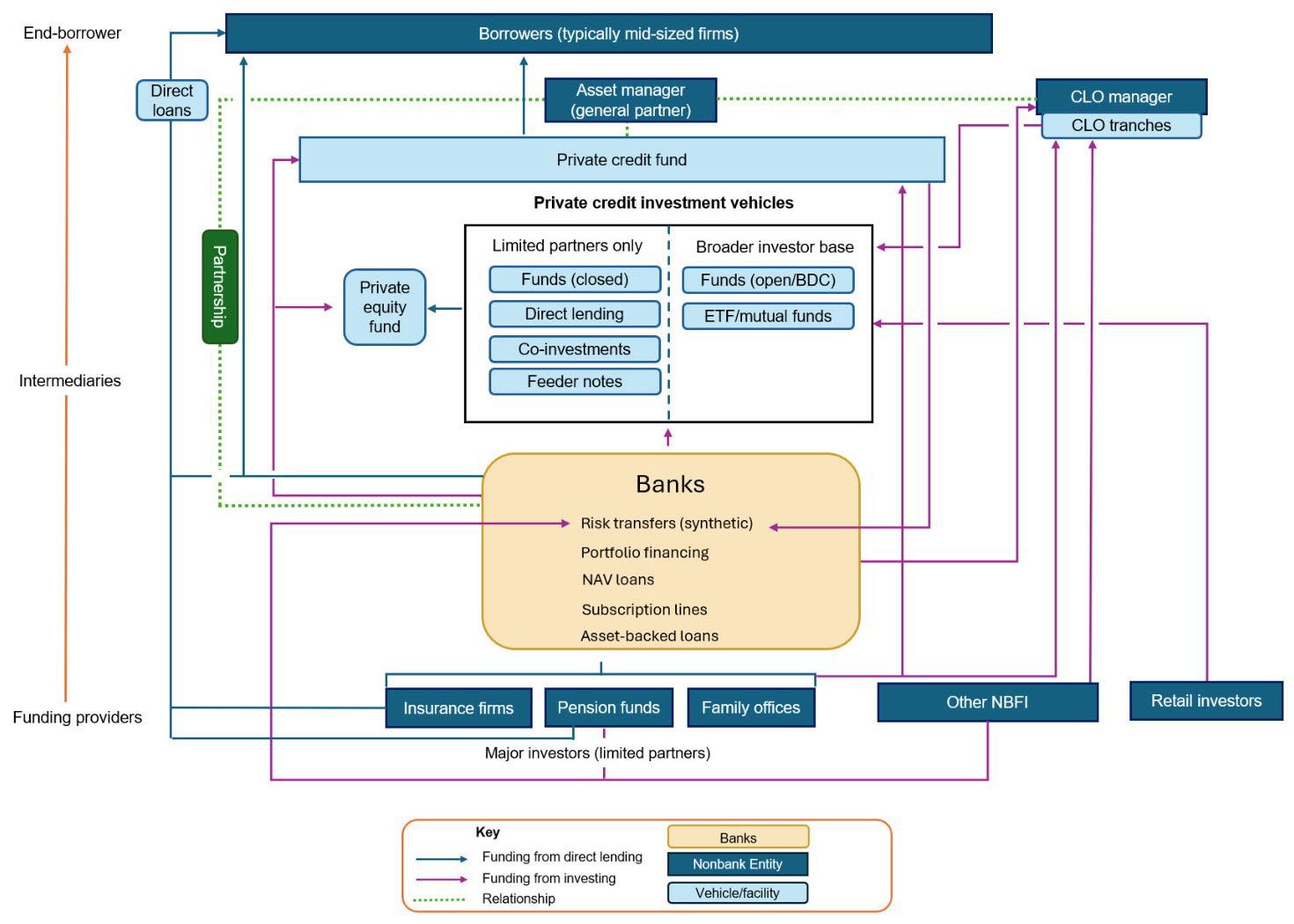
Interlinkages with banks: The private credit ecosystem is characterised by deepening interconnections between asset managers, banks, insurers and private equity firms. Banks and private credit funds are connected through financing arrangements and strategic partnerships. Across FSB members, the available data captures direct exposures of around $220 billion of drawn and undrawn bank credit lines to private credit funds, while some commercial estimates range from $270-$500 billion. This range highlights some of the data challenges in private credit. However, there are also potential vulnerabilities from a range of other indirect exposures including through banks providing revolving credit facilities to companies that are simultaneously borrowing from private credit funds and the growing use of synthetic risk transfers.

Borrower credit risks and valuation practices: The report warns that valuation opacity and reliance on private credit ratings can amplify strains in stress. Private credit borrowers typically lack public ratings, creating transparency challenges for market-wide monitoring. Available evidence indicates that borrowers typically have lower credit quality and higher leverage than borrowers observed in comparable public markets. There are some signs of borrower stress as usage of payment-in-kind arrangements has increased and some increases in default rates, albeit from low levels.. The growing use of private ratings, sometimes from lesser-known providers, to facilitate investment by rating-reliant investors (including insurers) also warrants monitoring. Private credit lending is concentrated in a few sectors, notably technology, healthcare, and services, complicating surveillance and increasing the risk that a firm‑ or sector‑specific shock turns into broader market stress.

Concentration, leverage and liquidity issues: Concentration arises from significant exposure to sectors such as technology, healthcare, and services. Leverage is reflected in the presence of opaque, multi-layered structures. Liquidity issues stem from the growing popularity of funds offering redemption options to investors, which may heighten the procyclicality of private credit.

Data gaps: The report warns that data gaps hinder effective oversight of the sector. Differences in definitions across jurisdictions and limited fund‑ and loan‑level information make it hard to assess exposures and potential transmission channels. The report proposes a core set of comparable metrics for authorities to track market size and growth, links with banks and insurers, leverage, liquidity features, concentration, cross‑border activity, and borrower credit quality.

The FSB encourages authorities to:

  • address data challenges, including those related to the lack of granular fund and loan-level data and the absence of harmonised global definitions.
  • Deepen analysis of interlinkages of private credit with private equity and insurers and of liquidity mismatches in private credit funds.
  • Share supervisory approaches on risk management and governance for banks and nonbanks active in private credit, including aggregation of exposures, valuation practices, and the use of private ratings.

Notes to editors

This report forms part of the FSB’s work programme to enhance resilience in nonbank financial intermediation (NBFI). Further details on this can be found in its latest progress report.

The FSB coordinates at the international level the work of national financial authorities and international standard-setting bodies and develops and promotes the implementation of effective regulatory, supervisory, and other financial sector policies in the interest of financial stability. It brings together national authorities responsible for financial stability in 24 countries and jurisdictions, international financial institutions, sector-specific international groupings of regulators and supervisors, and committees of central bank experts. The FSB also conducts outreach with approximately 70 other jurisdictions through its six Regional Consultative Groups.

The FSB is chaired by Andrew Bailey, Governor of the Bank of England. The FSB Secretariat is located in Basel, Switzerland and hosted by the Bank for International Settlements.

Report on Vulnerabilities in Private Credit

| PDF full text (1 MB)

Interconnections between private credit funds and banks, insurers, and private equity firms are deepening, raising potential vulnerabilities.

The private credit market has grown significantly across jurisdictions, with its total size estimated to be between $1.5 trillion and $2 trillion. This growth is driven by its ability to provide tailored financing options for companies, including those with higher credit risks or limited collateral. In the past, private credit mostly focused on medium-sized businesses and was available only to institutional investors, such as pension funds and insurance companies. However, it is now increasingly being used by larger companies and is becoming more accessible to retail investors.

Stylised private credit ecosystem

The private credit ecosystem includes a variety of participants such asset managers, insurers, pension funds, and banks, with asset managers acting as general partners.

While the growth of private credit may bring benefits, it also affects potential vulnerabilities. Private credit at its current size and scope has not been tested during a severe economic downturn, which could expose leverage and borrower credit quality vulnerabilities.

This report provides an overview of the private credit ecosystem, identifying potential vulnerabilities related to interlinkages with banks. It also highlights the challenges in collecting and analysing data for effective monitoring of the sector. The report also discusses other potential vulnerabilities, such as interconnectedness with insurers and private equity firms, cross-border interlinkages, leverage, liquidity mismatches, and concentration.

FSB Regional Consultative Group for Middle East and North Africa meets virtually

The Financial Stability Board (FSB) Regional Consultative Group for Middle East and North Africa (RCG MENA) met on 30 April virtually, co-chaired by Governor Hassan Abdalla at the Central Bank of Egypt and Governor Fatih Karahan at the Central Bank of the Republic of Türkiye.

The virtual meeting, which brings together senior officials from central banks, financial authorities and regulatory bodies in the region, covered global and regional financial stability vulnerabilities including in light of recent developments in the region. Members also discussed the FSB’s ongoing work in 2026.

FSB finalises guidance on insurers subject to recovery and resolution planning

Press enquiries:
+41 61 280 8477
[email protected]
Ref: 6/2026

  • FSB publishes final guidance for authorities to assess which insurers should be subject to recovery and resolution planning (RRP) requirements.
  • The guidance outlines key criteria to consider when assessing individual insurers and specifies circumstances when RRP requirements should apply.
  • The guidance may help authorities in determining which insurers they should report to the FSB’s list of insurers subject to resolution planning standards consistent with the Key Attributes.

The Financial Stability Board (FSB) today published its finalised guidance on the scope of insurers subject to recovery and resolution planning (RRP) requirements. The guidance offers a structured approach for authorities to assess which insurers should be subject to those requirements, consistent with the FSB Key Attributes of Effective Resolution Regimes for Financial Institutions (Key Attributes).

The Key Attributes establish RRP requirements as a fundamental component of effective resolution regimes for financial institutions. The guidance published today outlines six key criteria that authorities should consider when evaluating whether an insurer should be subject to RRP requirements: nature, scale, complexity, substitutability, cross-border activities, and interconnectedness. Additionally, it identifies specific circumstances in which RRP requirements should apply, such as when an insurer provides a critical function or when its failure is likely to have a material impact on the financial system and/or the real economy of the jurisdiction. This is intended to align with the requirements in the International Association of Insurance Supervisors’ Insurance Core Principles.

The guidance helps to promote consistency in application of the Key Attributes across jurisdictions, while leaving some flexibility to accommodate differences in market structures, legal frameworks, and supervisory practices. The guidance may also help authorities in determining which insurers to report to the FSB’s list of insurers subject to resolution planning standards. This list is published annually in the FSB Resolution Report and on the FSB’s website. 

Notes to editors

In 2025, the FSB reaffirmed its decision to use the International Association of Insurance Supervisors Holistic Framework assessments instead of an annual identification of global systemically important insurers (G-SIIs) and launched a consultation on draft guidance outlining key criteria for authorities to consider when determining whether an insurer should be subject to RRP requirements. Today’s final guidance reflects public feedback received on that consultation.

The FSB coordinates at the international level the work of national financial authorities and international standard-setting bodies and develops and promotes the implementation of effective regulatory, supervisory, and other financial sector policies in the interest of financial stability. It brings together national authorities responsible for financial stability in 24 countries and jurisdictions, international financial institutions, sector-specific international groupings of regulators and supervisors, and committees of central bank experts. The FSB also conducts outreach with approximately 70 other jurisdictions through its six Regional Consultative Groups.

The FSB is chaired by Andrew Bailey, Governor of the Bank of England. The FSB Secretariat is located in Basel, Switzerland and hosted by the Bank for International Settlements.

Scope of Insurers Subject to the Recovery and Resolution Planning Requirements in the FSB Key Attributes: Final Report

| PDF full text (390 KB)

Recovery and resolution planning requirements are a fundamental component of effective resolution regimes for financial institutions, including insurers.

In 2022, the FSB announced it would discontinue identifying global systemically important insurers (G-SIIs) and would, among other things, provide guidance regarding approaches to determine the scope of application to insurers of the FSB Key Attributes of Effective Resolution Regimes for Financial Institutions.

This report offers a structured approach for authorities to assess which insurers should be subject to recovery and resolution planning (RRP) requirements, consistent with the FSB’s Key Attributes. The guidance outlines criteria authorities should use to assess whether an insurer should be subject to RRP requirements and the circumstances under which RRP requirements should always apply.

The approach helps to promote consistency in the application of the Key Attributes across jurisdictions, while leaving some flexibility to accommodate differences in market structures, legal frameworks, and supervisory practices.

The guidance may also help authorities in determining which insurers to report to the FSB’s list of insurers subject to resolution planning standards consistent with the Key Attributes. This list is published annually in the FSB Resolution Report and on the FSB’s website

Scope of Insurers Subject to Recovery and Resolution Planning Requirements in the Key Attributes: Overview of consultation responses

| PDF full text (214 KB)

On 25 November 2025, the FSB published a consultation report on the Scope of Insurers Subject to the Recovery and Resolution Planning Requirements (RRP) in the FSB Key Attributes. The consultation, which ended on 6 February 2026, aimed at gathering feedback on criteria to identify insurers subject to RRP requirements, on specific circumstances that should necessitate RRP requirements, as well as on FSB guidance regarding the definition of critical functions for insurers.
The FSB received 9 responses to the consultation, from both the public and the private sectors. Respondents expressed broad support for the report, while raising some concerns about potential overreach or duplication with other frameworks, and the need for clarification in certain areas.
This note summarises the feedback received on the consultation report and sets out the main changes made to the final report in order to address them.

Identification of Critical Functions of Insurers: Practices paper – Revised version

| PDF full text (588 KB)

The identification of critical functions is an important part of resolution planning, which is often conducted as a first step to help inform resolution planning decisions.

The Key Attributes of Effective Resolution Regimes for Financial Institutions set out the core elements that the FSB considers to be necessary for an effective resolution regime. Their application should allow authorities to resolve financial institutions in an orderly manner without exposing taxpayers to loss from solvency support and maintain continuity of financial institutions’ vital economic functions. The identification of these critical functions is therefore a core part of resolution planning and is often conducted as one of the first steps to build the basis for further resolution planning decisions.

This Practices Paper sets out the approaches taken by Australia, China, France and the Netherlands for the identification of critical functions of insurers. Each have developed policy for, or significantly progressed their thinking on, the identification of critical functions in their jurisdiction. The paper outlines commonalities and differences in background, scope, methodology and review process. The paper also describes the main critical functions which were identified and the main considerations which supported the identification of critical functions, providing illustrative examples for each jurisdiction.